Thursday, 2 March 2023

Almost 12% Of P-Hailing Workers in Malaysia Have A Bachelor’s Degree

The Department of Statistics Malaysia (DOSM) recently revealed the findings of a study it conducted on p-hailing workers in our country which garnered some intriguing results. The study sought to find out their age bracket, education level, earnings, working hours and more.

According to BERNAMA, in terms of the highest education level of p-hailing workers, the study found:

Sijil Pelajaran Malaysia (SPM)/Sijil Pelajaran Malaysia Vokasional (SPMV) – 39.54%

Diploma or equivalent – 23.24%

Bachelor’s Degree – 11.79%

No academic qualifications – 0.99% 

Didn’t attend school – 0.21%

Source: The Star, 11/11/21


As for the age bracket, the study found that 97.71% of p-hailing workers are aged 15 to 30 while the remaining 2.29% are senior citizens aged 60 and above. The DOSM also revealed that 73.98% treated p-hailing as their main source of income. And 70.35% cent make it their main occupation.

Only 22.05% contributed to the Employees’ Provident Fund (EPF). Furthermore, 63.39% do not have any savings while the other 36.61% have their own savings or investments.
In terms of insurance, the study found that 45.07% have their own insurance policy while the rest did not. DOSM also noted that there was an increase in the income of p-hailing workers after participating in food and goods delivery. These include:
RM1,501 to RM2,499 – 26.78%
RM1,500 and below – 23.39 %
RM2,500 to RM3,170 – 11.67%

According to DOSM, the working hours of p-hailing workers in a week show that the 3 highest categories are those who work between 49 hours to 84 hours (30.79%), 30 hours to 48 hours (25.84%) and less than 30 hours (25.42%). Furthermore, the study found that the top 5 reasons why they become p-hailing workers include covering daily expenses, helping the family, having flexible working hours, saving and not being bound by rules or employment contracts.

DOSM conducted the study between 1 March to 31 December 2022 and involved 6,657 respondents. Through the study, DOSM proposed 5 strategic areas covering 19 initiatives and 19 action plans. These include:

Ensuring that the welfare of p-hailing workers is protected under labour legislation or the equivalent
Providing appropriate complaint and communication channels to resolve disputes between service providers and workers

This is not a stable source of income or savings. The Government has to work harder in finding suitable employment for some of them. These people are vulnerable to loss of employment, accidents or health. Why can’t an appropriate Ministry monitor and assist these people? As a consumer, I benefit from their delivery of food or other items. But their reward mechanism may not reflect the risks involved.

On a separate note, e-hailing drivers have reduced the menace of the red and white taxis. If you drop the APs for taxis, little warlords have to conform to market forces. Could we drop APs and review the needs of those in e-hailing and p-hailing?

Reference:
Study: Almost 12% of P-hailing workers in M’sia have a Bacherlor’s Degree, Jamie, 
18 February 2023, The Star and Bacalah Malaysia

Wednesday, 1 March 2023

Why is the Ringgit Depreciating Again?

The ringgit has eased against the US dollar. Continued sell-off was largely due to strong US retail data with propelled bets on the Federal Reserve (Fed) hiking interest rates further.

The ringgit dropped to 4.4850/4.4895 on 28 February versus the greenback from previous day’s close of 4.4755/4.4805.


The higher US yields continued to move like a wrecking ball through local assets after a “very strong” January US retail sales print compounded a still sticky US inflation outlook.
The markets are awaiting US data that include weekly initial jobless claims, January housing starts, and Producer Price Index. The Fed Funds rate could reach a peak of 5.25% to 5.50% due to the lag effects of current US interest rate hikes working their way through the economy.

The ringgit ended mixed against a basket of major currencies. The local unit strengthened against the Japanese yen to 3.2799/3.2835 from 3.2816/3.2855 at close of Tuesday, 
28 February 2023 and depreciated against the British pound to 5.4152/5.4206 from 5.3576/5.3636 previously. However, it fell vis-a-vis the Singapore dollar to 3.3247/3.3285 from 3.3162/3.3204 and slipped versus the euro to 4.7572/4.7260 from 4.7212/4.7265.

We have little choice but to raise OPR to 3.0% from the current 2.75%. Why? We will suffer from higher imported inflation, if we choose not to do otherwise. This is not rocket science but common sense. When U.S. Fed Fund Rate is double our OPR, we are certainly under pressure on both exchange rate and elevated inflation. Before Covid, our OPR was 
3.00-3.25%. So, why can’t we do that? In addition, external debts are simply higher due to exchange rate translation.

References:
Ringgit eases to 4.40 level vs US dollar, FMT, 16 February 2023
Ringgit continues downtrend against US dollar close, Bernama, 28 February 2023


Tuesday, 28 February 2023

Malaysian 2023 Budget: Selected Highlights

The Malaysian 2023 Budget, which is themed “Developing Malaysia Madani”, was announced on 24 February 2023 by the Minister of Finance. The 2023 Budget has a total allocation of RM388.1 billion (an increase of RM15.8 billion, compared to the Malaysian 2022 Budget). The 2023 Budget has been broadly distributed as follows:

The top two recipients in terms of budget allocations for 2023 are the Education Ministry (RM55.2bil) and Health Ministry (RM36.3bil), constituting 23.6% of total expenditure. A substantial amount of the Government’s operating expenditure has been allocated for debt service charges, emoluments, retirement charges, and subsidies and social assistance.  The economy is expected to grow moderately, with a forecasted growth of 4.5% in 2023.

Several tax measures that will benefit individual taxpayers at large have been introduced, namely the reduction in personal tax rates and the extension of tax reliefs for individuals. 

From a business perspective, various measures have been introduced to support micro, small and medium enterprises, including the provision of various financing facilities with a total value of up to RM40 billion. 

Overview of the revenue and expenditure of the 2023 Budget is graphically depicted below:


Tax Rates for SMEs

Tax rate applicable to SME taxpayers ( i.e. companies and limited liability partnerships) be further reduced with effect from the year of assessment (YA) 2023

The above is a gesture for the M40 with T20 providing support.

Overall, there are several good initiatives for small and medium sized companies and individuals. But there is no single or several large/mega projects that could excite entrepreneurs or business people. In addition, there isn’t something to address inflation, cost of living, affordable housing, senior citizens, detention centres and corruption. Luxury goods tax is shooting one-self in the foot and I don’t understand capital gains on unlisted shares – when it is usually on listed shares. He could have broadened the tax base for SST, imposed a forex transaction tax, an exit tax for remittances above a certain limit, and widened the windfall tax to include banks and energy companies.

Overall, an expansionary budget which was rather tame and bland. It was a blessing he didn’t pursue on GST because we don’t fulfil two conditions – developed nation and Gini coefficient of below 0.3. Perhaps, he was not bold enough so as not to “spook” some before the June state elections?


Reference:

Tricor Insights, Budget Edition, Special Edition: 2023 Budget (Part 1), Tricor Taxand


Monday, 27 February 2023

Is Malaysia’s Education Curriculum Comparable to Others?

Recently, Education Minister said something so mindboggling - that Malaysia’s curriculum is comparable to countries such as Singapore and Japan. She justified it by saying it was based on a comparative study the ministry conducted - which also involved comparing Malaysia’s curriculum to that of Australia, the United Kingdom and Finland.

Just three days earlier, Muar MP cautioned the government by saying that the Malaysian education system is in crisis and needs reforms. The Muda president added that the weaknesses in the education system had caused even Malay middle-class families to send their kids to private or international schools.


Source: https://www.wikiimpact.com


The rot began when the then Abdul Razak Hussein administration started playing the nationalist card. English medium schools were converted to Malay-medium schools. Another issue, behind the problem, was that since Merdeka, many politicians who take on the education portfolio assume they will eventually become prime ministers. As such, our education system is the “playpen” of education ministers.  In the process, they have turned our children’s future into a national nightmare.

The enacting of the Private Higher Education Institutions Act 1996 (Act 555), the government has allowed the creation of private colleges and universities, popularly known as “mushroom colleges”. While these institutions (mainly tertiary ones) charge exorbitant fees, the quality of education may be poor. In some cases, it was so bad that students had to take these establishments to court.

One way to mend the situation is to table a White Paper on education reforms. First, start with reviewing the problem with our education system and what caused it. Engage with all possible interest groups. Then, investigate why non-Malay parents rather send their kids to vernacular schools or pay exorbitant fees to send them to private or international schools.

Finally, determine a way to ensure national schools become a top choice for all Malaysians. Perhaps, English schools are necessary. That’s what the private sector does and even UiTM. Perhaps, it is best the Minister appoints an independent commission to review and recommend the future of education in Malaysia.

The government must realise that the quality of our education system would reflect the employment numbers of the country. Many graduates are struggling to get jobs not only because of a sluggish economy but also due to the education quality. The graduates are not at fault. They definitely did not decide on our education policies. The politicians did.

If the education system was so good... 

why are graduates retrained by SC, BNM and others?
why do parents go looking for tuition teachers?
why do the middle-class Malay parents struggle to send their kids to private schools or Chinese schools?
why are civil servants today delivering such low-quality output even with a PhD (from a local university)?

I can go on. If you don’t acknowledge your own wretchedness, you will never fix the problem. We can blame Mahathir and all the rest but today is your time Fadhlina, so fix it or move out!


Reference:
Comment: Fadhlina, how’s view from under the sand? G Vinod, Malaysiakini, 19 Feb 2023

Friday, 24 February 2023

Federal Government Revenue: Scope for Improvement?

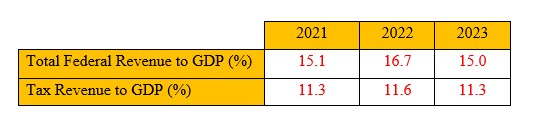
Federal Government revenue in 2022 has been projected to increase significantly by 22% to RM285.2 billion or 16.7% of GDP contributed by both tax and non-tax revenue. Tax revenue remains as the major contributor at 69.5% of total revenue or 11.6% of GDP, driven by strong economic recovery and higher commodity prices. Non-tax revenue collection is expected to increase its share of total revenue from 25.7% in 2021 to 30.5% in 2022 on account of higher dividend payment.

Tax revenue is projected to grow by 14.1% to RM198.2 billion with both direct tax and indirect tax are estimated to register double-digit growth. Direct tax collection is forecast to grow by 13.1% to RM147.2 billion, contributed mainly by higher companies income tax (CITA) collection at RM84.8 billion resulting from higher corporate earnings following the strong economic recovery.

Non-tax revenue is expected to surge by 44.9% to RM87 billion, largely contributed by higher proceeds from interest and return on investments. The bulk of the proceeds is from PETRONAS dividend totalling RM50 billion, of which RM25 billion is an additional dividend resulting from better profitability, while dividend from Bank Negara Malaysia amounted to RM5 billion.

For 2023, Malaysia’s expected economic growth between 4% to 5% coupled with the anticipated moderation in global commodity prices, will result in a slower growth of the Federal Government’s tax revenue at 3.7% amounting to RM205.6 billion or 11.3% of GDP. However, non-tax revenue is estimated to decline to RM67 billion or 3.7% of GDP, offsetting the increase in tax revenue. Consequently, the Federal Government’s revenue is projected to decline by 4.4% to RM272.6 billion. Direct tax is estimated to increase by 3.5% to RM152.4 billion, representing 74.1% of total tax revenue. The bulk of the increase is attributed to better collection.

Indirect tax is estimated to increase by 4.3% to RM53.2 billion in tandem with steady consumption and trade growth. SST is forecast to record RM32 billion or about 1.8% of GDP.

Non-tax revenue is estimated to decline by 23% to RM67 billion or 3.7% of GDP. The lower collection is due to lower proceeds from investment income, particularly dividend from PETRONAS which is projected to be lower at RM35 billion.


Although our total revenue to GDP is above 15% over last three years, our tax revenue to GDP ratio is below 12%.


According to research conducted by the International Monetary Fund, countries should have a tax-to-GDP ratio of at least 12% in order to experience accelerated economic growth. The countries that are part of the Organisation for Economic Co-operation and Development (OECD) all meet that threshold, with an average tax-to-GDP ratio of 33.8%.


Our ratio of tax revenue to GDP is well below that of a more developed nation. There is scope to improve tax revenue not by way of GST but through new and progressive taxation.

References:
Section 2, Federal Government Revenue, Fiscal Outlook 2003, Ministry of Finance

Tax-to-GDP Ratio – comparing tax systems among OECD countries, www.visualcapitalist.com

Thursday, 23 February 2023

Tech Giants Fired 200,000 People!

Why are the world's biggest tech companies laying off employees? And how many more jobs will be affected? Big Silicon Valley tech companies Google, Microsoft, Amazon, and Meta have collectively laid off more than 100,000 employees in recent months. Many believe more layoffs are yet to come. But why are the world's biggest tech companies laying off employees? Tech sector is undergoing a major shift as Microsoft joins Amazon, Meta and Salesforce in announcing major layoffs.

Over-hiring during COVID? During the pandemic, Google made rapid changes to its Google Meet video conferencing platform to accommodate more participants, and Meta made similar changes to WhatsApp's video conferencing product.


Source: https://commons.wikimedia.org


Meta told employees to prepare for a large-scale downsizing in November, cutting 11,000 employees. And Salesforce cut 10% of its employees in January 2023 after the company's chief executive admitted the firm over-hired. Sundar Pichai pointed this out in the letter he sent to employees after announcing the layoffs of 12,000 people. 

Pressure from Investor Fund managers and early investors in big tech companies like Google, Meta, Amazon, Twitter others made management to make quick decisions to counter slowing business growth. 

Several new investment initiatives by Silicon Valley tech titans are also not profitable. Amazon's robotics division, Microsoft's metaverse and virtual reality division AltspaceVR, and Meta's Substack competitor called Bulletin are all verticals that are somewhat futuristic and require a lot of investment and burned a lot of money. Cash burning has also been one of the reasons companies are trying to cut costs. According to top management of big tech companies,  a recession is anticipated shortly. But while Microsoft will continue to spend on the cloud, acquisitions and innovation, it will pull out of non-strategic areas like hardware.

The upshot – Covid (over-hiring), slowing business growth and forecasted recession - are all good reasons but the people impacted are real. Unfortunately, managements seldom get fired. Employees do!

Reference:
Why tech giants Amazon, Google, Meta, and Microsoft fired 200,000 people, Kahekashan, Hans News Service, 30 Jan 2023


Wednesday, 22 February 2023

2023: What Should We Do?

THE latest Bank Negara briefing presented a mixed bag of economic data for Malaysia. On the bright side, it was announced that Malaysia recorded its strongest annual economic growth in two decades for 2022. With a 8.7% growth, exceeding expectations, the economy surpassed the pre-pandemic level of 2019.The labour market is recovering, domestic demand continues to expand and the country’s headline inflation is averaging  3.3% for 2022. If OPR remains at 2.75%, then we can’t rope-in imported inflation. And exchange rate cannot then be on “a wing and a prayer”.

On a seasonally-adjusted quarter-on-quarter basis, the economy contracted by 2.6% in the fourth quarter of 2022 (4Q22), after slowing down in the previous three quarters.


Three sectors of the economy – construction, agriculture as well as mining and quarrying – remained below the pre-pandemic level. Really, the two sectors to focus on are services and manufacturing. Together they constitute more than 80% of GDP.

Within the services sector, some sub-sectors are also below pre-pandemic levels, namely food and beverage, accommodation, real estate, business services and private education. Underlying or core inflationary pressures have remained stubbornly high at 3% in 2022 and are expected to stay elevated, despite some moderation expected in 2023.

Credit growth also slowed down in 4Q22 as loan repayments outpaced disbursements. Malaysia’s mixed economic performance is not surprising. While the country has recovered well from the effects of Covid-19 restrictions, it had to manage various domestic and external headwinds.

The latest official gross domestic product (GDP) projections would be released in the upcoming Budget 2023 to be tabled on Feb 24. For 4Q22, Bank Negara announced that the GDP expanded by 7% year-on-year. The growth was still above the long-term average of 5.1%. The 4Q22 growth was supported by continued expansion in private consumption and investments, improving labour market conditions, resilient demand for electrical and electronic (E&E) goods as well as the recovery in tourism activities. The services sector grew by 8.9% y-o-y, down from 16.7% in 3Q22.

The manufacturing sector expanded by 3.9% y-o-y in 4Q22, on the back of continued expansion in E&E, primary and consumer clusters. In comparison, the sector grew by 13.2% y-o-y in 3Q22.

MIDF Research anticipates the domestic economy to expand further by 4.2% in 2023. The reopening of China’s economy sooner than predicted is expected to provide extra boost to Malaysia’s services exports as well as tourism activity.

The drivers of growth remain private sector consumption and investment. Spurring consumption may elevate inflation while improving the eco-system for private investment will help us generate GDP above 4-5% in 2023. So, for the Government’s priority is to listen to trade associations, professionals and others on how bureaucracy or “red-tape” that can be undone without compromising quality. For example, a Residence Pass Talent visa is handled jointly by Talent Corp and Immigration. When you need the right professional, why must Immigration be involved as the co-chair of an approval Committee? Simple streamlining of processes and getting “control” out of the way is progress.

Ease of doing business is key to attracting FDIs not just incentives. We may have superior incentives than Singapore but investors still prefer Singapore because of ease of doing business, speed of response by authorities and a “clean” image in getting things done. Our competition – Indonesia, Thailand and Vietnam - are working on improvements year-on-year. Please don’t get into a sleep mode now!

Reference:
“Honeymoon” over as reality sets in, Ganeshwaran Kana, The Star, 11 Feb 2023